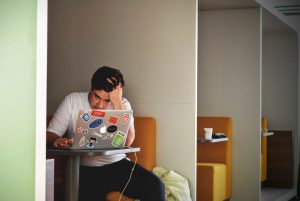


It is 3 am.
You are wide awake and exhausted; the house is silent, and your brain has just remembered something you said in a meeting in 2019.
Welcome to nighttime anxiety, the tax you pay for getting through the day on adrenaline and good manners.
I see it in nearly every client who walks into my anxiety hypnotherapy clinic in Solihull. Sleep is usually the first thing to go, and it is often the first thing people mention. I have lived it too, and my own nighttime anxiety got louder when I hit perimenopause. Here is what I see in clinic, what the research says, and what I actually get people doing.
Why does nighttime anxiety hit when the lights go out?
Because the day finally stops. All day you have been busy, and busy is a very good distraction. Then you lie down, the distractions disappear, and the critical voice grabs the microphone. Everything you should have done, could have done and did badly gets replayed in full. Anxiety often shows up as exactly this: a stream of negative thinking that leaves you feeling not good enough. If you recognise that voice from the day, my post on high-functioning anxiety will feel familiar.
But the body plays a role too. Picture a car doing 70 miles an hour all day because you are busy. When you get into bed, you take your foot off the accelerator, but the car does not stop. It slows down. Then in the early hours, your body does what it is meant to do and puts its foot back on the accelerator to prepare you for waking up because Cleveland Clinic notes that cortisol, a stress hormone, is lower in the evening and peaks in the morning just before you wake.
Here is the catch. You are not starting from zero or neutral. You are starting from maybe 50 or 60 and climbing toward 80, so the jump isn’t much. This is how I explain it to clients, and it is why so many people wake up feeling anxious for no obvious reason.
What nighttime anxiety can feel like
The signs I hear about most are a tight chest, sweating, uneven breathing, and stomach cramps, often with a mind that will not slow down and is consumed by racing, competing thoughts. If you get these regularly, it is worth seeking support from your medical practitioner and having a further conversation about it.
The two nights I hear about most
I tend to see two patterns. In the first, a client tells me they dread bedtime. They lie down, the spiral starts, and they replay everything they did wrong. It never ends with satisfaction. They finally drop off because they are too tired to stay awake, not because they feel calm.
In the second, they fall asleep but wake in the night, again and again. Researchers propose that when the mind stays on high alert, REM sleep, the stage linked to emotional processing, can become unstable and broken up, and dreams can pick up the worries from before bed.
Here is how I put it to clients. Deep sleep is your body’s recovery, and REM is your mini mental health session every night. If your head is full of stories about how rubbish you are, that session gets hijacked, and your sleep gets lighter and more broken.
Why nighttime anxiety can get louder in perimenopause
I see this pattern in many women, and I have lived it myself. The NHS says hot flushes can bring palpitations or anxiety, and that poor sleep can leave you feeling irritable, stressed and anxious. Add night sweats and a brain that is already counting everything you got wrong, and you have a very long night.
Hormones play a part too. Progesterone has a calming, sleep-promoting effect on the brain, and it drops in perimenopause, which may be one reason switching off gets harder. Falling oestrogen is also linked to more waking in the night, according to the British Menopause Society. Experts say the evidence for progesterone on its own is less settled, so I would not treat it as the whole story.
If this is you, my page on menopause support in Solihull explains how I work with it, and your GP can talk through your options.
The coffee, sugar and wine trap
Here is what many clients do not realise. Poor sleep is linked to poor mental health, and then people adapt without noticing. You are knackered, so you reach for sugar, carbs and extra coffee to get through the afternoon. Then those habits make the next night harder. The NHS says to avoid alcohol, tea and coffee at least 6 hours before bed. On the food side, a King’s College London review of 11 small studies found sleep-deprived people ate around 385 extra calories a day. While it was a small study, it does reflect what I hear in the clinic.
Now the wine. I am not saying never drink. I am saying do not lean on a glass every night to unwind or to get you to sleep. The Sleep Foundation says alcohol can help you drop off faster at first, but it leaves you with less REM sleep than usual and lighter, more broken sleep in the second half of the night. Falling asleep is only half the job. What you want is sleep good enough that you are not wide awake at 3 am with your heart going.
What helps with nighttime anxiety
Here is what I actually get my clients doing. The aim is simple: send your brain a clear message that it is time to wind down.
Give your brain a signal (the body will follow)
A consistent bedtime routine is the first thing I recommend. People with anxiety often get anxious about relying on a routine, but your brain thrives on one. It signals that the day is over, not a rulebook. Try something that does not rev you up: a book, a calm podcast, a cup of sleep tea. The NHS suggests relaxing for at least an hour before bed and not exercising within 4 hours of bedtime, so save the hard workout for earlier in the day.
Put the phone across the room
Put your phone as far away as possible, so doomscrolling takes effort. The NHS also advises against using phones right before bed.
Have a plan for 3am
If you wake in the night, have tools ready. I use slow breathing, in for 4 and out for 6. It moves you out of your head and into your body, and your mind follows. My post on breathing techniques for anxiety shows you how. I also give clients free sleep tracks, and you can grab the Deep and Restful Sleep one, or the Calming Anxiety and Building Confidence one, from my free hypnosis tracks page. It is fine to play one again at night.
If you are still awake after a while, get up. Sleep clinics teach this as a technique called stimulus control. The Sleep Foundation describes getting out of bed if you lie awake for more than 10 minutes, and I tell my clients around 20. Go downstairs, do something calm and give yourself permission to come away from the bed. Lying there cross with yourself for being awake just winds you up more.
Count what went right
Most of my clients are experts at listing what they have not done. I get them to flip it and write down what went well that day. It goes against the grain, and it takes time to rewire. But it keeps the critical voice quieter at bedtime, and that gives you a better shot at a better night. If your overthinking is the main thing keeping you up, my post on how to stop overthinking goes deeper on that side.
My unpopular opinions on sleep
First, eight hours is not a law. The Sleep Foundation lists 7 hours or more for adults and says the right amount varies from person to person. Chasing eight hours and panicking when you do not get it is a brilliant way to create more nighttime anxiety. Notice what works for you.
Second, a mountain of advice out there goes, “If you have this, then it is that”. Unless you are a medical doctor, nobody should be making that call from the sofa. Use what helps, and get checked if it does not.
When to speak to your GP about nighttime anxiety
My general rule of thumb with clients is this. If your sleep has been poor most nights for two weeks, talk to your GP, because something else could be going on. The NHS says to see your GP if changing your sleep habits has not helped, if you have had trouble sleeping for months, or if it is making daily life hard to cope with.
This blog is written by Asha Berzon, a Clinical Hypnotherapist registered with the CNHC (Complementary and Natural Healthcare Council — the UK’s independent regulator for complementary therapies, accredited by the Professional Standards Authority). Asha is also a CPD-accredited workplace wellbeing consultant based in Solihull, West Midlands. She spent 17 years as a Senior Probation Officer before training in solution-focused, trauma-informed hypnotherapy. Today, she works with individuals and organisations including NPCC, WMPS, and the College of Policing.
Last updated: 3 November 2026
If nights have been rough for a while, you do not have to white-knuckle it. You can book a free 15-minute call with me, and we can talk about what is going on.
Frequently Asked Questions.
Can you have a panic attack at night?
Sadly yes.
Panic attacks that happen during sleep are called nocturnal panic attacks, and the Sleep Foundation describes people waking up terrified. If you are going through the menopause transition, this one matters. Mind lists panic attacks as a menopause symptom, often at night or alongside hot flushes. Slow breathing can help in the moment, and my post on breathing techniques for anxiety shows you how. If you think you are having panic attacks, day or night, tell your GP.
Does sleep hypnosis help with nighttime anxiety?
In my clinic, I see it help again and again. When your thoughts are racing, a track gives your mind something else to focus on. If you have also written down what went well that day, your body is already feeling calmer, and your mind is slowing, and the track builds on that. That is one reason I give my clients tracks. Worth knowing: the research is still early. A 2015 review of 13 small studies found hypnotherapy shortened the time to fall asleep compared with no treatment, but further research is required in this area.
Is there a free sleep hypnosis track for anxiety?
I have two free ones on my free hypnosis tracks page: Deep and Restful Sleep and Calming Anxiety and Building Confidence. Enter your details in the form, and they’ll come to you. Try one at bedtime, and play it again if you wake in the night.
What is the difference between insomnia and nighttime anxiety?
The NHS says insomnia means you regularly have trouble sleeping, whether that’s falling asleep, waking during the night, or waking too early. Nighttime anxiety is what is happening in your head and body when you try. They overlap because the NHS lists stress, anxiety or depression among the most common causes of insomnia, and Mind describes a cycle where poor sleep leads to worrying and worrying leads to poor sleep.
Does it matter if I fall asleep during a hypnosis track?
Nope, in fact, I would say for a sleep track, it can be a bonus. The way I explain it to clients, the part of you that listens in the background keeps listening, and drifting off means your critical mind has stopped commenting on every word. That lets you stay focused on the track and the message, helping to reprogramme the mind.